
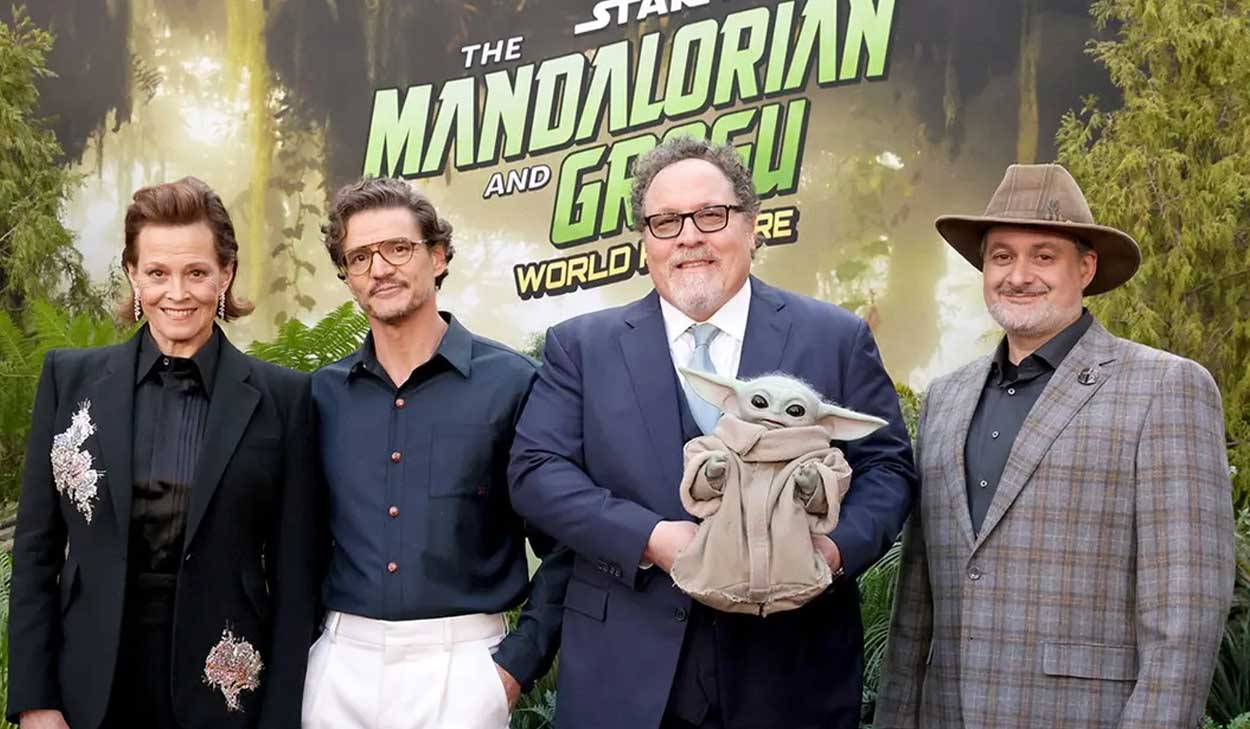
The Mandalorian and Grogu hits a historic low for Disney Star Wars at the box office before a massive second-weekend collapse.
Disney gambled on bringing its flagship streaming characters to movie theaters to revive a dormant cinematic empire. Instead, the strategy triggered a historic low for the sci-fi franchise. The Mandalorian and Grogu crashed onto the big screen with a soft Memorial Day weekend debut, failing to match even the opening numbers of the infamous 2018 flop Solo: A Star Wars Story. The situation worsened over its second weekend when the film suffered a devastating 69% collapse in ticket sales, getting beaten out domestically by low-budget horror counterprogramming. This theatrical misfire reveals a widening gap between streaming popularity and big-screen drawing power.


Tracking the Historic Box Office Decline
The numbers reveal an audience that is actively tuning out. During its highly anticipated four-day holiday debut, the Jon Favreau-directed feature pulled in a domestic total of $102 million, bringing its initial global haul to $165 million. While those figures secured a technical number-one spot for the weekend, they represent the weakest theatrical launch for a Disney-era Star Wars film.

The baseline looks even worse when contrasted with previous historical entries. When adjusted for modern inflation, the $103 million domestic debut of Solo in 2018 would equal more than $136 million today, making Baby Yoda’s theatrical debut look incredibly pale by comparison.
Breaking Down the Second-Weekend Crash
The initial soft landing turned into a freefall during week two. Fans who simply wanted to see Star Wars return to theaters after a seven-year hiatus evaporated immediately.
- The Weekend Drop: Domestic earnings plummeted to just $25 million from 4,300 locations.
- The Defeat: The multi-million-dollar space opera fell behind Backrooms and the ultra-low-budget indie horror breakout Obsession.
- The Running Totals: The domestic cumulative total slowly crept to $137 million, while the global intake reached $246 million.
The Budget Paradox Saving Disney From Total Disaster
If there is a single shield protecting executives from catastrophic financial losses, it comes down to tighter production discipline. Unlike the bloated $275 million to $300 million budgets that sank Solo, this cinematic spin-off was built for a far tighter $165 million.
Because the production costs were kept relatively low for a massive sci-fi blockbuster, the movie remains on track to eventually break even or clear a modest profit once international totals, home media, and streaming licensing settle. Critical reviews remained highly critical, with many reviewers noting that the project felt less like an epic cinematic event and more like three episodes of a television show stitched together.
Sizing Up the Star Wars Cinematic Scale
The current theatrical landscape shows a clear downward trajectory for the franchise’s opening weekends.
| Star Wars Film Title | Domestic Holiday Launch | Production Cost | Second-Weekend Falloff |
| Solo: A Star Wars Story (2018) | $103 Million | ~$275+ Million | 65% |
| The Mandalorian and Grogu (2026) | $102 Million | $165 Million | 69% |
What Lies Ahead for the Galaxy
The lukewarm reception places immense pressure on Lucasfilm’s upcoming theatrical pipeline. Audiences appear less willing to leave their couches for stories that feel native to Disney+. The true test of whether the public has completely cooled on the brand will arrive when the studio steps away from streaming tie-ins entirely, starting with the scheduled 2027 release of Star Wars: Starfighter starring Ryan Gosling.
The Studio Takeaway: To recapture the cultural dominance of the past, theatrical releases must offer distinct, massive cinematic experiences. Recycling streaming narratives onto premium large-format screens is no longer enough to guarantee a bulletproof box office return.